
Add Row
Add Element
UPDATE
March 23.2025
2 Minutes Read

NCAA Wrestling Champions Meet Trump: The Impact on Sports and Politics

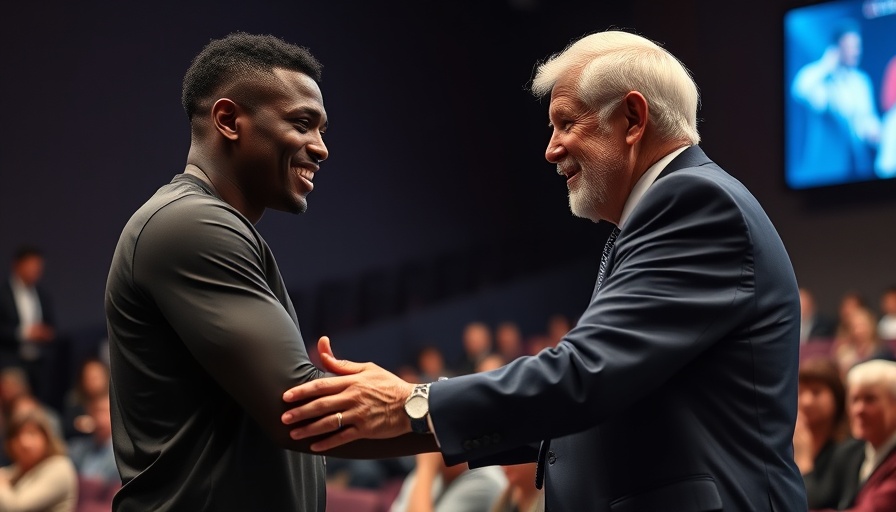
NCAA champions meet Trump in candid interaction with attendees.

College Champions and Political Handshakes: A Surprising Intersection

The recent NCAA wrestling championships saw not just incredible displays of athleticism, but also an unexpected political moment when champions were photographed shaking hands with former President Donald Trump. This event, which quickly became a focal point for both sports enthusiasts and political commentators, raises questions about the role of politics in sports and the crossover appeal of such prominent figures.

Understanding the Significance of the Moment

The handshakes between Trump and NCAA wrestling champions have sparked conversations about the relationship between athletes and politics. For a significant number of college athletes, visibility goes beyond the wrestling mat. Engaging with political figures opens doors to new audiences and partnerships, which can be beneficial for both parties. This unique intersection of sports and politics reflects how broadly influential figures like Trump are, especially in moments of triumph.

Reactions from the Sports Community

Reactions to this moment have been mixed, illustrating the depth of opinion on political endorsements within sports. Some athletes view such interactions as an opportunity to express their political beliefs or align themselves with influential figures, while others see it as a departure from the pure competition of athletics. This dichotomy reveals the varying ways in which athletes navigate their public personas and personal beliefs in the often polarized political climate of today's society.

The Broader Implications for Future Opportunities

As sports and politics continue to intertwine, the possibilities for advocacy and visibility expand. For athletes, especially in centralized competitions like NCAA championships, aligning with a known political figure can enhance their public image and offer new endorsement opportunities. However, it also poses the risk of alienating segments of their fan base, drawing attention to the personal stakes involved in such interactions.

What's Next for NCAA Champions?

These champions not only won titles but also catapulted themselves into discussions that transcend sports. As they navigate their careers post-college, how they handle their newfound visibility in political discussions could define their legacy, impacting both their athletic careers and their personal identities. Fans and supporters will be watching closely to see how they choose to engage with the political landscape.

National News

0 Comments

Write A Comment

*
*
Related Posts All Posts

Bryce Harper's Bold Defense of Representing the United States in Sports

Update Bryce Harper Defends the Honor of Representing the U.S. In a recent discussion, Bryce Harper, a prominent figure in Major League Baseball and a player for the Philadelphia Phillies, passionately expressed his sentiments regarding the honor of representing the United States in sports. This comes in response to a wave of mixed feelings from fellow athletes, particularly in the Olympic arena, where some Olympians have voiced their indifference toward competing under the Stars and Stripes. The Dilemma of National Representation During an episode of "Bussin' With The Boys," Harper reflected on recent comments from athletes like freeskier Hunter Hess and skier Mikaela Shiffrin, who articulated feelings of conflict when it comes to representing the U.S. The opinions expressed by these Olympians, who feel a disconnect between their values and the nation's current issues, struck Harper as astonishing. He stated, "That's crazy" and emphasized that the privilege of representing one’s country should transcend any political or social strife. Harper asserted, "No matter where one may stand politically, it is always the greatest honor to represent the United States." His perspective aligns with his upcoming participation in the World Baseball Classic (WBC), where he looks forward to playing for Team USA, making it his first time since 2009. Harper believes that sports serve as a unifying force, capable of bringing happiness to viewers and promoting goodwill, a sentiment that was echoed in a 2020 ESPN interview where he criticized Major League Baseball for not allowing players to compete in the Olympics. Conversations Among Athletes Prominent athletes have expressed mixed feelings about representing the U.S. at international events. In contrast to Harper's enthusiasm, Olympians like Hunter Hess noted feelings of "mixed emotions" while competing. Shiffrin spoke of the struggle to reconcile representing America amid societal violence. This juxtaposition clearly showcases the complex relationship between personal values and national pride, a line that athletes are increasingly navigating. The Future of American Sports While Harper is rooting for a more inclusive sports dynamic that allows major league players to compete in the Olympics, he brings forth a vital conversation about the perception of sportsmanship and representation. Looking ahead to the 2028 Olympics in Los Angeles, where baseball will return, Harper encourages MLB to consider a season pause that would allow elite players to showcase their skills on the world stage, just like their counterparts in the NHL. Given that Team USA hasn't seen consistent success in baseball at the Olympics since it became an official medal sport in 1992, Harper's advocacy could pave the way for a stronger presence and increase interest in American baseball globally. Final Thoughts As the debate around athletes' feelings of representation grows, Bryce Harper stands as a powerful voice advocating for national pride in sports. His desire to represent the U.S. in international competitions echoes the sentiment of countless athletes who view wearing their country's colors with immense pride. Whether other Olympians share this sentiment or not, Harper's outlook brings focus to the enduring honor of representing one's nation.

Avalanche Near Lake Tahoe Claims Lives of Six Cherished Mothers

Update A Heartbreaking Loss: Community Mourns Six MothersIn a tragic event that has left the communities surrounding Lake Tahoe reeling, six mothers lost their lives in a devastating avalanche. This incident has been cited as one of the deadliest in California's history, claiming eight victims in total. The mothers, all skilled backcountry skiers, were dedicated to their craft and shared a profound bond through their love for the outdoors.The women, identified as Carrie Atkin, Liz Clabaugh, Danielle Keatley, Kate Morse, Caroline Sekar, and Kate Vitt, were celebrated not just as athletes, but as cherished mothers and friends. Their families emphasized their connection: "They cherished time together in the mountains," they stated in an emotional communiqué, highlighting the community’s shared grief during this difficult moment.Understanding the Avalanche TragedyAuthorities are investigating the factors leading to the avalanche, which struck while the group was on a guided expedition organized by Blackbird Mountain Guides. Rescuers had to shift their focus from rescue efforts to body recovery as conditions worsened, making recovery slow and challenging. The conditions were threatening, with heavy snowfall and rising avalanche risks reported in advance of the expedition.In total, the group consisted of 15 people, which included 11 skiers and four guides, none of whom expected that their love of the slopes would lead them into such a perilous situation. In statements made by snow safety experts and those involved in the guiding community, the emotions are palpable, with a collective sense of urgency to understand and learn from this tragedy.Community Support and Coming TogetherThe aftermath of the avalanche has highlighted the deep sense of community that these families supported. Statements from Sugar Bowl Academy, a local elite ski institution, poignantly captured the shared shock. The tragedies such as this send ripples through interconnected networks, profoundly affecting everyone involved.As the bereaved families focus on navigating this heartbreaking loss, the broader community rallies around them, providing support. It is through this shared compassion and solidarity that many hope to find some semblance of solace. The road ahead will certainly be challenging, but expressions of unity and mutual care continue to emerge.Grievances and Calls for ChangeAs investigations unfold, discussions have arisen within the skiing community regarding safety protocols for backcountry skiing. Local experts weigh in, stressing the importance of robust communication and understanding of avalanche cues. The tragedy poses critical questions about the efficacy of existing safety measures, and whether guidelines need reassessment to prevent future accidents.The search for answers might also yield recommendations for improving the safety conditions under which guided trips are administered, especially during high-risk weather scenarios.The Legacy of Those LostWhile words of loss and sorrow fill the air, one common thread remains: the deep love and appreciation for the time shared by the mothers who are now commemorated by their families and friends. Each woman lives on in the hearts of her children and community, and it is this enduring legacy that they aim to celebrate.In grappling with this unfortunate reality, it serves as a reminder of the fragile balance between adventure and caution, leading many to reflect on the sheer unpredictability of nature and the profound risks that come with backcountry skiing.

High Stakes Tax Battle: NYC Mayor Mamdani's Socialist Agenda vs. Hochul's Stance

Update Ideological Clash: The Tax Debate in New York City The ongoing confrontation between New York City Mayor Zohran Mamdani and Governor Kathy Hochul reflects deep ideological divides within the Democratic party, primarily centered around fiscal responsibility and socio-economic equity. At the crux of this debate is Mayor Mamdani's call for increased taxes on the wealthy to fund city services, which he argues are crucial in preventing a looming fiscal crisis. When Taxing the Rich Meets Political Resistance Despite Mamdani's intentions, Hochul remains resolutely opposed to raising taxes, emphasizing the potential negative consequences for the New York economy. The governor warns that higher taxes on affluent New Yorkers might provoke an exodus of the wealthy - a sentiment echoed by Wall Street Journal editor Gerry Baker, who characterized the mayor's proposals as "socialism in action." With over 40% of New York's state revenue sourced from the wealthiest citizens, any moves to increase their taxes carry significant implications for the state's financial health. Proposal of a Property Tax Increase: A Last Resort Facing opposition, Mamdani has threatened to raise property taxes by nearly 10% as an alternative if his income tax proposal does not gain traction in Albany. This potential property tax hike could impact millions of households across the city, further straining the already burdened middle-class consumers. Critics argue that such increases do not dwell solely on the affluent but inevitably trickle down to affect the working class and small business owners as well. Is There a Middle Ground? While the budget outlook appears more favorable with a smaller-than-expected deficit, Mamdani's calls for ongoing taxation reforms reveal an urgent need for sustainable revenue sources to ensure New Yorkers receive adequate services. The discourse raises questions about fiscal policies and governance, raising an important consideration: how can New York balance the urgent need for revenue while avoiding punitive measures that could harm its economy? The Bigger Picture: Future Outlook for NYC The current tax debate is emblematic of broader shifts in urban governance and municipal funding. As cities grapple with rising costs, homelessness, and infrastructure issues, policymakers face mounting pressure to develop innovative solutions to fund public services without alienating key economic contributors. With potential consequences echoing beyond the mayor's office, maintaining this delicate balance remains essential for both the administration and the city’s future. Ultimately, Mamdani's push for reform reflects the broader movements towards equity and justice in urban governance—highlighting the persistent yet complicated dynamics in state and local politics.

Terms of Service

Privacy Policy

Core Modal Title

Sorry, no results found

You Might Find These Articles Interesting

T
Please Check Your Email
We Will Be Following Up Shortly
*
*
*