
Add Row
Add Element
UPDATE
June 18.2025
2 Minutes Read

In Tehran, Airstrikes Heighten Uncertainty: What Should We Do?

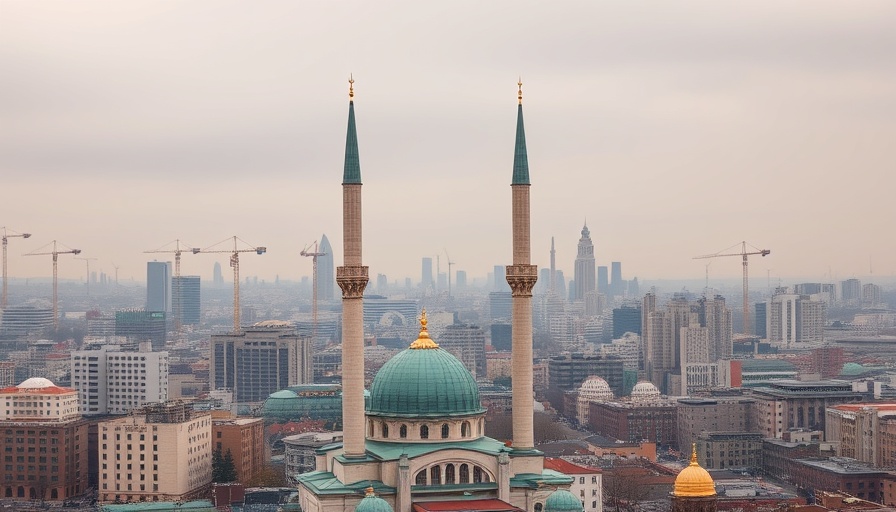
Cityscape with mosque and construction, overcast sky, Tehran setting.

Uncertainty Looms Over Tehran Amid Israeli Airstrikes

As Israeli jets fly over Tehran, uncertainty and fear dominate the lives of its residents. The once-bustling city now feels eerily quiet as thousands flee, seeking safety amidst the chaos of airstrikes. Reports from Tehran, heard through intermittent WhatsApp calls, reveal the anxiety of those who remain, struggling to comprehend the situation and make decisions about their safety.

Local Perspectives: A Sister's Fear

One resident described the distressing moment she communicated with her journalist sibling in London, asking, "What should we do?" This embodiment of Iranian citizens reflects the growing despair among families facing life-threatening bombardments. With President Trump's evacuation warnings ringing in her ears, this sister chose to stay, fearing the unknown more than the aerial threats. Many like her remain torn between evacuating amidst dwindling supplies or staying put, relying on a fragmented sense of safety.

The Impact of Airstrikes on Daily Life

Amidst all this turmoil, everyday life in Tehran is visibly disrupted. Shops, including bakeries, have begun to shut their doors, and food shortages are looming large as supply chains break down. While electricity and water remain, the fragile peace is fading quickly as panic spreads fear among those forced to confront a hostile environment. The streets, now symbolizing a city in distress, stand silent, highlighting the stark change from Tehran's usual vibrancy.

Looking Ahead: Australian Parallel Insights

The situation in Tehran has drawn comparisons to other global conflicts, such as the recent tensions in Ukraine, where civilian populations also face immediate threats due to geopolitical strife. Residents vacate urban areas, mirroring those in Tehran—each struggle illuminated by stories of family bonds being tested by external pressures. This comparison serves to remind us of the interconnectedness of global issues, illustrating how fear transcends borders.

Understanding the Broader Context

For professionals like lawyers and accountants, this situation exemplifies the complex nature of modern conflict and the role of international law in protecting civilians. This uncertainty underscores the urgency of international dialogue and intervention, as well as the need for robust legal frameworks that ensure protection amidst warfare.

The unfolding crisis in Tehran serves as a reminder that we must remain vigilant about the human aspects of war. A depth of understanding is crucial as we navigate these tumultuous waters while advocating for peace and stability.

World News

0 Comments

Write A Comment

*
*
Please complete the captcha to submit your comment.
Related Posts All Posts

What the Artemis II Lunar Flyby Means for Future Space Missions

Update Historic Voyage to the Moon: Artemis II Breaks New GroundNASA's Artemis II mission set sail on April 1, 2026, marking an extraordinary return to manned lunar exploration after more than fifty years. Launched from the Kennedy Space Center in Florida, this significant journey around the moon is also a crucial step toward establishing humanity's long-term presence on the lunar surface.Trump's Call to the Astronauts: Making History TogetherIn a remarkable moment following the lunar flyby, former President Donald Trump reached out to the Artemis II astronauts, expressing his pride in their accomplishments. "Today you’ve made history and made all America really proud," he remarked during the call. His dialogue emphasized not only the historic nature of the mission but also aspirations for future explorations, including potential manned missions to Mars.Scientific Significance of the Lunar FlybyThe Artemis II mission isn't just a nostalgic return to the moon; it's a pivotal part of a larger agenda that aims to lay the foundations for a permanent lunar base. This mission holds scientific value as well, offering an opportunity to study the moon's resources and geology while simultaneously preparing for potential life on other planets.The Impact of the Solar Eclipse ExperienceDuring the mission, the crew also experienced a total solar eclipse. Astronaut accounts describe the event as "absolutely spectacular and surreal,” providing not just a visual treat but also a unique scientific observation from a vantage point that few have witnessed. This enriching experience adds a layer of excitement to an already historic mission.Looking Ahead: What Comes Next?As the astronauts make their way back from the moon, anticipation builds for future Artemis missions. In his call, Trump hinted that the United States is on track to not only return to the moon but also to send astronauts to Mars, showcasing an enduring commitment to space exploration. The legacy of Artemis II can be a catalyst for a new era of scientific discovery and international collaboration in space.

Trump's Iran Ultimatum: What Happens If Negotiations Fail?

Update The Countdown to Conflict: Trump’s Ultimatum to Iran As tensions escalate in the Persian Gulf, President Donald Trump has issued an ultimatum to Iran, marking a perilous moment in U.S.-Iran relations. In a recent announcement, Trump has threatened devastating military action against Iranian infrastructure, claiming that by tomorrow evening, significant assets including power plants and bridges could be "decimated". The ultimatum puts Iran in a tight spot as they reject a temporary ceasefire proposal, raising concerns about the potential for expanded conflict. Military Might vs. Psychological Warfare The U.S. military's tactical prowess has been highlighted through operations that showcase advanced capabilities, yet this raises a critical question of whether such power can achieve desired diplomatic outcomes. Trump himself acknowledged during a press conference that closing the Strait of Hormuz, vital for global oil transportation, is susceptible to limited resources. His comments suggest that psychological deterrence may be even more significant than military might in this high-stakes standoff. Iran's Stance: Holding the Line Despite the looming threats, Iran has outright rejected Trump's demands for a ceasefire and has presented its own set of conditions for negotiations—a clear indication that, for Tehran, diplomatic engagement is contingent on substantive guarantees against further military attacks. Iran's steadfast position highlights their reliance on controlling key maritime routes and their willingness to endure hardships in pursuit of freedom from perceived external oppression. This resistance poses a significant challenge for U.S. delegates seeking to broker peace amidst ongoing hostilities. International Concerns: The Risk of War Crimes The international community is increasingly alarmed by the escalation of threats. The UN has cautioned that any attack on civilian infrastructure would amount to a violation of international law. This raises critical ethical considerations regarding the ramifications of Trump's proposed military actions that could indiscriminately harm civilian targets, thus potentially categorizing such maneuvers as war crimes. The Implications of Ongoing Conflict As the deadline nears for a decision on a ceasefire, the world watches closely. Trump's threats to attack Iranian infrastructure are not without consequence—escalating military action could lead to further instability in the region and threaten global oil supplies. Analysts fear that a lack of resolution could plunge both the U.S. and Iran deeper into an aggressive cycle of retaliatory responses, severely impacting not only the parties involved but also global economic interests. Conclusion: Navigating a Nuclear Watershed As the clock ticks inexorably toward the deadline, the urgent call for dialogue remains critical. Only through diplomatic negotiation can the U.S. and Iran hope to circumvent a cataclysmic escalation of hostilities.

Trump's 48-Hour Deadline on Iran: What This Means for Global Stability

Update Trump’s Ultimatum: The Pressure on IranIn a stark warning that has reverberated around the globe, President Donald Trump declared that Iran has 48 hours to agree on a peace deal regarding the key Strait of Hormuz or face devastating military action. Speaking to ABC News, Trump stated that failure to reach an agreement will lead to "blowing up the entire country." His inflammatory rhetoric has raised significant concerns regarding the implications for civilian infrastructure in Iran and for global stability in the region.The Strategic Importance of the Strait of HormuzThe Strait of Hormuz is a vital maritime passage, accounting for roughly one-fifth of the world’s oil supply. Its significance was highlighted recently when Trump warned that Iran's failure to comply with U.S. demands would result in military strikes targeting its energy infrastructure, a move that could have catastrophic consequences for global oil markets and geopolitical relationships. The threat signals a potential escalation of military engagement in the region, the results of which could be dire, echoing past conflicts that have destabilized nations and economies.Mixed Messages from IranIn the face of Trump’s ultimatum, Iran’s officials have issued their own statements, showcasing the tension between willingness for dialogue and aggression. While some Iranian leaders, like Foreign Minister Abbas Araghchi, have signaled openness to negotiations, others threaten to retaliate with increased military action. This duality indicates the complexities of diplomacy in a region rife with historical grievances and political strife.The Global Reaction: Is Diplomacy at Risk?As talks continue, the reactions from global leaders and analysts echo a call for diplomacy over military solutions. Many emphasize the need for negotiations in light of the severe humanitarian and economic repercussions of escalated conflict. Trump’s claims of "decimating" Iran militarily raise concerns about the broader implications for regional peace, not only for Iran but also for surrounding nations and U.S. allies.What’s Next? The CountdownWith the deadline looming, many are watching closely to see if a resolution can be reached. Trump's firm stance could lead to a military escalation, but there remains a possibility for negotiations, especially as mediators from third-party countries seek to facilitate talks between the U.S. and Iran. As the world holds its breath, the next moves made by both parties could alter the geopolitical landscape significantly.

Terms of Service

Privacy Policy

Core Modal Title

Sorry, no results found

You Might Find These Articles Interesting

T
Please Check Your Email
We Will Be Following Up Shortly
*
*
*