
Add Row
Add Element
UPDATE
September 08.2025
2 Minutes Read

Exploring Labor Day Parade: Union Solidarity Despite Political Strife

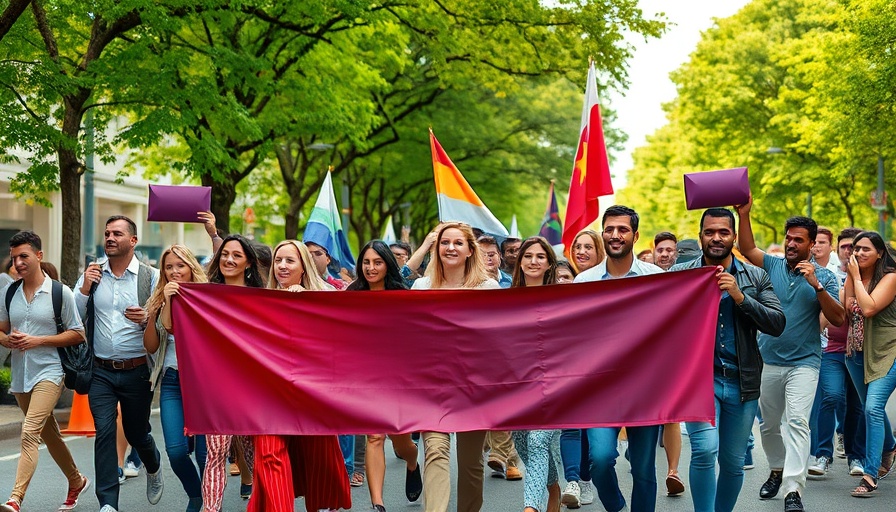
Labor Day Parade Union Solidarity group marching with banner in city

Labor Day Parade Showcases Union Power Despite Challenges

On September 6, 2025, the streets of Manhattan resonated with the chants and voices of thousands at the NYC Labor Day Parade, a vibrant display of solidarity among union members from over 200 different organizations. While this event typically draws a more substantial crowd, the marching unions, including notable groups like the Writers Guild of America East, orchestrated a powerful narrative around the importance of collective bargaining and workers' rights.

Political Statements Amidst Economic Reality

The parade featured a mix of trade unions and political figures, including Governor Kathy Hochul and State Comptroller Thomas DiNapoli, highlighting the intertwined nature of political and economic landscapes. Signs proclaiming “Billionaires Don’t Own Us” showcased the frustrations felt by many workers regarding the current economic disparity, even as union membership has steadily declined over the decades—from 20.1% of the workforce in 1983 to just 9.9% in 2024, as reported by the U.S. Bureau of Labor Statistics.

Solidarity in a Divided Climate

Despite an atmosphere of solidarity, the parade did not escape the contentious political climate. Marchers expressed their discontent towards political leaders, particularly at Trump Tower, emphasizing that while the event may have been peaceful, the underlying tensions were palpable. This sentiment echoes the need for a more united labor front as unions face significant challenges in maintaining their memberships and influence in a rapidly changing economy.

Looking Ahead: The Future of Labor Unions

The choice of co-grand marshals, Mark Maroko from the Hotel and Gaming Trades Council and Terri Carmichael Jackson from the WNBA, illustrates an adaptive strategy to bolster union strength through supportive initiatives in industries like gaming and sports. With new casino proposals in New York City, these alliances may offer a way forward for unions to regain strength amidst daunting statistics regarding union membership.

As we reflect on the sentiments and themes presented during this year’s parade, it’s clear that the fight for workers’ rights remains alive and well, albeit challenged by economic changes and political dynamics. Connecting the dots between past struggles and future aspirations is essential for the ongoing journey of labor solidarity.

National News

0 Comments

Write A Comment

*
*
Related Posts All Posts

Missouri Congressional Redistricting Victory: What It Means for GOP Power

Update Missouri's Strategic Move in RedistrictingThe political landscape in the United States is constantly shifting, and the recent congressional map signed into law by Missouri Governor Mike Kehoe may signify a pivotal moment in the ongoing redistricting battles. Geared to secure a Republican advantage, this map is expected to provide the GOP an additional seat in the House of Representatives, a critical factor as we edge closer to the midterm elections.Impact of Redistricting on Future ElectionsRedistricting, the process of redrawing electoral district boundaries, can significantly influence election outcomes. This year's adjustments, particularly in Republican-controlled states like Missouri and Texas, demonstrate a strategic effort to consolidate GOP power amidst looming Democratic challenges. With Democrats narrowing their path to regaining the House majority, every seat gained through state redistricting has the potential to alter party dynamics.Trump's Endorsement and Its ImplicationsEx-President Donald Trump's enthusiastic backing of the new Missouri map highlights how interconnected these local decisions are with national party objectives. His claim that the map will help "send an additional MAGA Republican to Congress" illustrates the stakes involved. As Trump continues to play a significant role in shaping GOP strategies, his influence will be closely monitored leading into 2026’s elections.A Broader Look at Political ManeuveringThis electoral maneuvering isn't confined to Missouri; it reflects a broader trend where states are shaping their districts ahead of the midterms. Democratic states, such as California, are also seeking to redraw boundaries, highlighting a competitive tug-of-war for congressional control. With the outcomes of these maps set to impact not only party representation but also legislative agendas, the implications are vast.ConclusionAs Missouri's new map sets the stage for potential GOP gains, it raises vital questions about the future direction of both state and national politics. Observers in fields like law, medicine, and business may find that these changes in representation could affect policies and regulations that impact their professions. Staying informed on the redistricting process will be crucial as the political landscape continues to evolve.

Exploring Trump's Controversial National Guard Deployment to Portland: Newsom's Legal Challenge

Update The Tensions Surrounding Military Deployment in Oregon California Governor Gavin Newsom has sparked a political firestorm by announcing plans to sue President Trump over his decision to deploy 300 members of the California National Guard to Oregon. This move follows a federal judge's recent temporary restraining order that blocked Trump's attempt to federalize the Oregon National Guard amidst growing civil unrest in Portland. Newsom characterized the President's actions as 'a breathtaking abuse of the law and power,' highlighting a critical confrontation between state authority and federal overreach. Context of Current Military Deployment Decisions The clash over military deployment in Portland stems from intensified protests against the Trump administration's immigration policies. With the U.S. District Judge Karin Immergut ruling that the protests were not sufficiently violent or disruptive to justify such a forceful federal response, the situation underscores a significant challenge to Trump's narrative that depicts Portland as a 'war-ravaged' city. The Judge, appointed by Trump himself, criticized the administration's justification for deploying troops, warning it could blur the lines between civil and military authority. Legal Implications and the Role of State Officials Newsom's announcement reflects a broader concern among state officials regarding federal military personnel operating within their jurisdictions. Oregon Attorney General Dan Rayfield has also voiced strong opposition, noting the absence of violence in recent protests. Rayfield insisted on the need to protect state sovereignty and hold the administration accountable for actions deemed politically motivated rather than grounded in public safety. Understanding the Broader Impact of Military Presence The proposal to send National Guard troops has reignited conversations about the appropriate use of military force in civil situations. While some argue that such actions are critical for maintaining order, others perceive them as increasingly authoritarian. Governor Newsom emphasized that the deployment of troops is less about public safety and more about political power plays, echoing sentiments highlighted by legal experts and political commentators nationwide. Next Steps in Legal Battle As this legal battle unfolds, it sets a profound precedent regarding the extent of presidential authority over state National Guard units. The Ninth Circuit Court of Appeals will now weigh in on the decision to block this deployment, raising important questions about accountability, the rule of law, and the interplay between federal and state powers. Observers of this legal duel are keenly watching to see how it will affect future military-engaged protests across the nation and the political landscape in the lead-up to the next elections.

Understanding the Hudson Yards Bomb Threat: Implications for NYC Commuters

Update Hudson Yards Subway Evacuated Amid Bomb Scare During Rush HourOn the evening of October 3rd, an alarming scene unfolded at the Hudson Yards subway station in New York City as a bomb threat prompted immediate evacuations. The threat, reported through a 911 call around 5:08 PM, led police to swiftly clear the area, which is typically bustling with commuters. The incident caused significant disruptions to the evening rush, resulting in the cancellation of number 7 trains between Grand Central and Hudson Yards, leaving many travelers stranded.Authorities acted quickly, placing a perimeter around the station and utilizing specialized NYPD units, including the Bomb Squad, to address the situation. In a response typical of high-stakes incidents, police dispatched helicopters and strategic response groups to oversee the unfolding events and ensure public safety. Thankfully, after approximately three hours of heightened alert, police confirmed that no explosive devices were found, and the area was deemed safe to reopen around 8:15 PM.The suspect, a 35-year-old man from Sugar Land, Texas, was arrested shortly after the scare. He faces charges of making a terrorist threat, although the motive behind his alarming actions remains unclear. This incident not only disrupted a major transit hub but also caused chaos in the surrounding business area, affecting restaurants and shops that found themselves cut off from pedestrian traffic.The Impact of Public Panic During Transport ChallengesBomb threats and similar disturbances carry consequences that extend beyond the immediate fear and chaos. In today's world, where transit systems serve as lifelines for millions, a single threat can lead to widespread disruptions, affecting commerce and daily life. For professionals such as lawyers, accountants, and healthcare providers in the area, these incidents can lead to missed appointments, lost income, and increased stress levels for their clients and themselves.The Role of Police and Emergency Services in Crisis SituationsThe rapid response by the NYPD and MTA emergency services exemplifies the critical role these agencies play in safeguarding public safety. Their effectiveness in crisis management is paramount in restoring normal operations, as seen when the area was safely cleared and subway service resumed. This incident illustrates the importance of preparedness and coordination among law enforcement, first responders, and public transit authorities when confronting potential threats.Reflecting on Community Safety and Response PreparednessAs we navigate the complexities of urban living, the Hudson Yards subway bomb threat serves as a stark reminder of the need for vigilance and community awareness. Engaging in conversations about safety protocols can empower communities and better equip individuals to respond effectively in emergencies. The absence of injuries this time illustrates that swift action can mitigate risks, but it also calls for continuous improvement in our emergency response strategies. New York City remains a vibrant metropolis reliant on its subway system, and so, understanding how to maintain safety amid potential threats is crucial for all who live and work within its dynamic environment.

Terms of Service

Privacy Policy

Core Modal Title

Sorry, no results found

You Might Find These Articles Interesting

T
Please Check Your Email
We Will Be Following Up Shortly
*
*
*