
UPDATE
September 16.2025
2 Minutes Read

Explore the Enchanting Stained Glass at P.J. Clarke’s Tavern in Midtown Manhattan

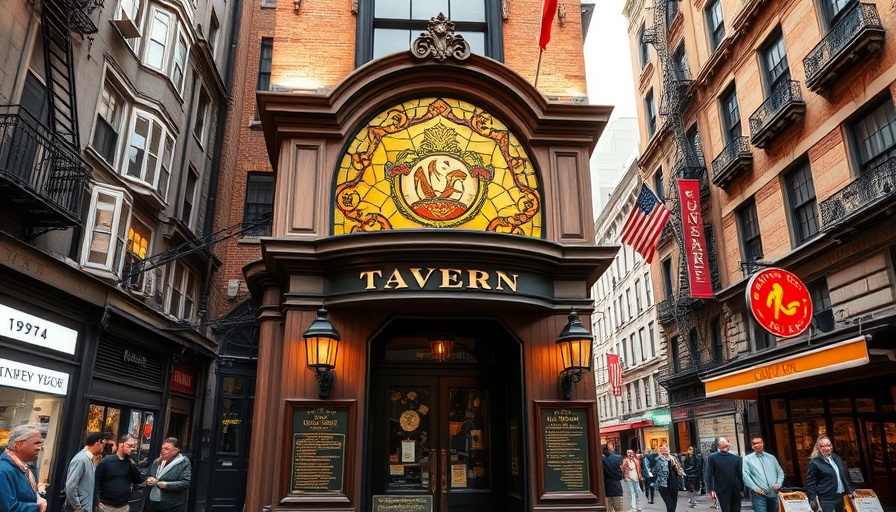
Charming entrance of P.J. Clarke's Tavern with stained glass, city backdrop.

A Glimpse into the Past: The Charm of P.J. Clarke’s Tavern

Nestled within the bustling streets of Midtown Manhattan lies P.J. Clarke’s, a historic tavern that has served patrons since the late 19th century. This iconic bar occupies a Civil War-era brick building, its roofline sheered off, signaling changes that would transform the neighborhood over the decades. Since its conversion into a tavern in 1884, P.J. Clarke’s has been an enduring symbol of the workingman's legacy amidst the rapidly evolving cityscape.

The Legacy of Irish Immigration

Originally bought by Irish immigrant Patrick “Paddy” J. Clarke in 1912, the bar has existed for over a century, symbolizing the Irish laborer's influence in New York. Clarke, who lived above the establishment, faced adversity during Prohibition but adapted by selling bootlegged spirits. After his passing, the bar changed hands, all while maintaining its charm, even as neighboring tenements gave way to towering skyscrapers.

An Enchanting Atmosphere

The real allure of P.J. Clarke’s lies in its architectural details, notably its beautifully crafted stained glass. As the late afternoon sun filters through the beveled glass, it casts warm colors against the dark wood interior, creating a cozy ambiance that welcomes patrons from all walks of life—corporate workers, tourists, and celebrities alike. This enchanting stained glass not only offers a feast for the eyes but also stimulates a sense of nostalgia and connection to the past.

Why P.J. Clarke’s Should Be on Your Radar

In a world where many historic establishments succumb to the pressures of modernity, P.J. Clarke’s stands as a testament to resilience. Its ability to endure and adapt while preserving its unique character makes it a cornerstone of New York’s rich history. For lawyers, accountants, and medical professionals seeking a retreat from their busy lives, this pub offers a momentary escape into a bygone era, reminding us of the simple joys found in good company and great stories.

When you find yourself in Midtown, make a point to visit P.J. Clarke’s. Experience firsthand its charming atmosphere and rich history, and let it remind you of the enduring spirit of New York City’s working class.

New York

0 Comments

Write A Comment

*
*
Please complete the captcha to submit your comment.
Related Posts All Posts

Discovering the Legacy of Eliza Jumel: America’s Richest Woman

Update An Enigmatic Legacy: The Life of Eliza Jumel Eliza Jumel’s story is one of remarkable resilience and intrigue, shining like a hidden gem in the history of New York City. Born in the 1770s in Providence, Rhode Island, to a mother engaged in prostitution, Eliza defied her challenging beginnings. Her sharp wit and beauty propelled her from humble origins to wealth and societal prominence, ultimately making her America’s richest woman in the early 19th century. A Complex Character: Society’s Darling and Scandal Moving to New York City, Eliza soon mingled with influential figures, including Aaron Burr and Benedict Arnold’s wife, juggling between perceived scandal and social aspirations. Notorious for her alleged rags-to-riches ascension through dubious means, she was rumored to have used deception to capture the heart of wine merchant Stephen Jumel. An anecdote suggests she feigned illness to induce a wedding proposal, illustrating her determination to secure a place in high society. The Architectural Influence: Morris-Jumel Mansion In 1810, the Jumels purchased the Morris-Jumel Mansion, a structural masterpiece that would intertwine their legacy with the fabric of New York history. This estate, which became a social hub, is now the oldest house in Manhattan. It was briefly a headquarters for George Washington, but its association with Jumel has since transformed it into a museum where her life and the stories of everyone she touched are carefully preserved. Political Intrigue and Personal Trials Eliza’s wealth increased as she navigated legal channels following Stephen’s death. Her marriage to Aaron Burr turned tumultuous; she accused him of exploiting her finances. Their divorce became a public spectacle, highlighting the societal constraints on women and the challenges even the wealthiest faced in a male-dominated landscape. After their separation, Eliza’s resilience shone through as she continued to manage her vast estate. A Lasting Impact and Ghostly Legends Jumel’s death in 1865 did not mark the end of her influence. Instead, it sparked numerous ghost stories surrounding the Morris-Jumel Mansion, keeping her memory alive. Many claim to have seen her ghost or felt her presence within the mansion’s walls, further entwining her life with the cultural lore of New York City. Today, the mansion serves as a reminder of Jumel’s complex life, hosting a myriad of events from ghost tours to historical discussions, illuminating her narrative against the backdrop of contemporary issues in society. As we remember Eliza Jumel, we are prompted to reflect on the stories of women's struggles and achievements throughout history and consider how these narratives can inform our understanding of current societal dynamics. Engaging with Jumel’s legacy encourages a broader conversation about the challenges women still face today.

Understanding the Clash Over Cultural Heritage in Our Communities

Update The Clash Over Cultural Heritage in Our Communities The ongoing debates surrounding cultural heritage in local communities not only resonate with professionals like lawyers, accountants, and medical practitioners but also spotlight a fundamental aspect of our shared identity as citizens. As communities evolve, conflicts often arise between the desire for modernization and the preservation of historical significance. This clash is vividly illustrated by various preservation initiatives that highlight how cultural heritage can be maintained even amid community changes. Emergency Preparedness: A Necessity Effective emergency preparedness can pave the way for safeguarding cultural landmarks and essential community spaces. For instance, as conflicts emerge, communities can strategize effective methods for protecting their cultural sites through timely planning and execution. By applying lessons learned from historical crises, communities can develop plans that protect their assets while fostering an inclusive spirit that values the past. During periods of upheaval, such as geopolitical conflicts, securing funding for cultural initiatives becomes vital. Temporary support systems can ensure continuity in the cultural sector and provide community workers with the necessary resources to preserve heritage sites. Strategies for Conflict Resolution in Preservation As communities embrace change, implementing effective conflict resolution strategies becomes paramount. These strategies cater to interpersonal conflicts that can amplify community divisions, ensuring that voices are heard and considered. Facilitative mediation techniques have proven effective in various settings, from local jurisdictions to organizational dynamics, promoting dialogue and understanding around contentious issues such as land use and development. By fostering common ground, professionals across various sectors can work together to create actionable plans that benefit both the cultural and economic vitality of their neighborhoods. Lessons from Global Initiatives Analyzing global initiatives sheds light on the potential for local preservation efforts. Conversations from international forums demonstrate the importance of collaboration between cultural workers and public stakeholders. Past examples have shown that, despite efforts to marginalize cultural voices during conflicts, compassionate approaches and community-led initiatives can rise above these challenges. Future Directions: Building Cultural Resilience As we look forward, cultivating cultural resilience in our local communities stands as a key objective. By prioritizing heritage preservation within community plans, local leaders can champion a narrative that honors their past while forging a path to a dynamic future. Protecting cultural heritage needs to become an embedded priority in local governance, and with proactive responses and commitment, communities can transform their challenges into opportunities. Advancing an inclusive agenda benefits everyone—fostering understanding, identity, and cohesion among community members. Cultural preservation serves not just as a historical marker, but it also encourages all residents to take part in a purposeful discussion about their values and aspirations. Take Action: Your Role in Preservation Everyone has a role to play in protecting cultural heritage. By participating in local discussions, supporting preservation initiatives, and advocating for balanced community growth, professionals can help create a united front. Your voice matters, and together, we can honor our cultural legacy while embracing progress.

St. Joe’s Soup Kitchen: A Model for Community Support and Engagement

Update A Lifeline for New Yorkers in NeedIn a city as bustling and vibrant as New York, the struggles of those less fortunate can often go unnoticed. St. Joe’s Soup Kitchen stands as a beacon of hope, serving the city's hungry and homeless for over 40 years. Awarded the prestigious 2026 Village Award, this all-volunteer organization provides hundreds of meals every Saturday, ensuring that no one in the community goes hungry.More than Just a MealThe mission of St. Joe’s extends beyond just providing food. This soup kitchen serves around 400-500 guests each week, who include not only the homeless but also individuals facing various hardships—seniors, the temporarily unemployed, and those struggling to make ends meet. The soup kitchen works in alignment with other social services, partnering with organizations like Project Renewal to offer health and substance abuse services, emphasizing that a meal is just the first step towards stability.Community Support and Volunteer EngagementThe success of St. Joe’s relies heavily on community involvement. Local businesses and volunteers come together to create a warm, welcoming environment every Saturday, underscoring the power of collective action. The soup kitchen aligns with other similar organizations mentioned in resources such as Idealist, which promotes volunteerism and social impact careers. This cooperation not only feeds the hungry but fosters a sense of belonging and community among participants.The Future of Support ServicesAs urban challenges continue to evolve, organizations like St. Joe’s Soup Kitchen are critical in providing immediate relief while addressing broader societal issues. Emerging trends indicate a shift towards holistic care in social service frameworks, which prioritize dignity and empowerment alongside nourishment. This approach is echoed in stories from other support agencies, where the focus is on sustainable recovery and community reintegration.Get Involved: Your Chance to Make a DifferenceFor those looking to contribute, St. Joe’s offers numerous ways to get involved, from volunteering on Saturdays to donating supplies. Engaging with your community through such initiatives not only helps feed those in need but also enriches your own understanding of the societal fabric that shapes our lives.

Terms of Service

Privacy Policy

Core Modal Title

Sorry, no results found

You Might Find These Articles Interesting

T
Please Check Your Email
We Will Be Following Up Shortly
*
*
*